
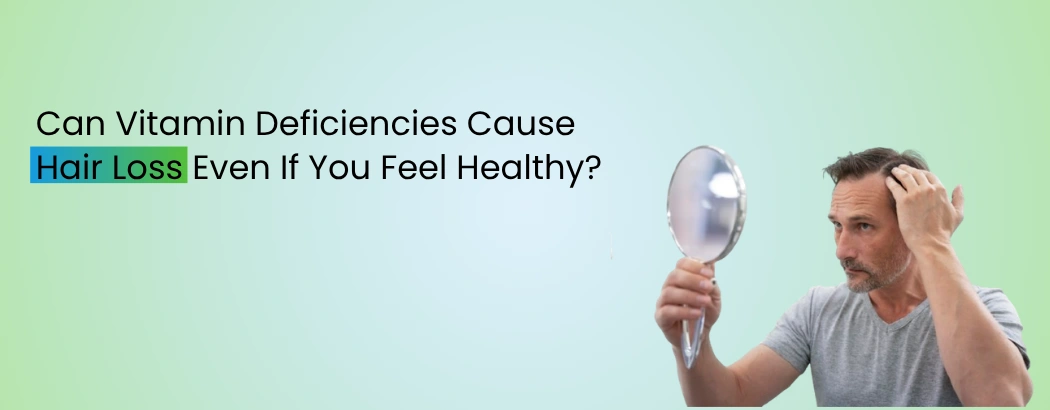
Can Vitamin Deficiencies Cause Hair Loss Even If You Feel Healthy?
There is a deceptive comfort in the way we interpret the word healthy. We often equate health with a lack of overt illness—you are not running a fever, your energy levels are manageable, and you aren’t visiting a hospital. Yet, there is a silent biological architecture operating beneath the surface. Sometimes, the first warning sign that this internal balance is shifting does not appear on a blood test but on your pillowcase, in your hairbrush, or along the widening part of your scalp.
We are frequently told that if we feel fine, we must be fine. But when hair begins to shed in unusual quantities, or when the overall density of your scalp starts to diminish, your body is offering a masterclass in subtlety. It is communicating a specific, internal requirement that is not being met, even if you feel perfectly vibrant in your day-to-day life.
The question remains: Can a vitamin deficiency truly cause hair loss in an otherwise healthy-feeling individual? The answer is a resounding yes. Hair is a non-essential tissue in the eyes of your body’s survival hierarchy; when resources are low, it is the first place the body decides to cut the budget.
The Biological Hierarchy: Why Your Hair Loses the Battle
To understand why your hair suffers while you feel healthy, you must understand your body’s survival priorities. Your brain, heart, kidneys, and liver are essential for immediate survival. Your hair follicles, while aesthetically vital, are biologically disposable.
When you are deficient in specific micronutrients, your body initiates a process of triage. It allocates the limited supply of nutrients it does have to maintain vital organ function, effectively "shutting off" the metabolic energy meant for the hair follicles. This is why you can feel energetic enough to perform your daily tasks while your follicles are effectively starving in the background. By the time you notice the hair loss, the deficiency has often been brewing for months, quietly bypassing your internal awareness.
The Silent Culprits: Essential Nutrients Your Follicles Crave
Hair thinning isn't always about genetics; often, it is about the "soil" in which the hair grows. Certain deficiencies are notorious for creating a sub-optimal growth environment that can lead to thinning, shedding, and a lack of luster.
1. The Iron and Ferritin Connection
Iron deficiency is perhaps the most common, yet overlooked, trigger for hair loss. Ferritin is the protein that stores iron in your body. Even if your hemoglobin levels are normal—meaning you aren't clinically anemic—low ferritin levels can signal to your follicles that there isn't enough iron to support sustained growth. This often manifests as a slow, diffuse thinning that catches many people off guard.
2. Vitamin: D: The Growth Signal
Vitamin D is not just a vitamin; it is a hormone that regulates cell growth. Follicle cycling depends heavily on adequate Vitamin D levels. When these levels drop, follicles can get "stuck" in the telogen (resting) phase, preventing the transition into the anagen (growth) phase. You may feel fine, but your follicles are essentially asleep on the job.
3. The B-Complex and Cellular Energy
Biotin, B12, and folate are the workhorses of cellular division. Hair follicles are among the fastest-dividing cells in the human body. If you lack the B-complex vitamins necessary to facilitate this rapid division, the follicles simply cannot produce the hair fiber at the rate required, leading to weakened, thin strands that break before they ever achieve length.
Clinical Design Tip: Addressing structural insecurities requires moving beyond the "masking" phase and into the restoration phase. Explore how clinical precision can rectify the false narratives of your physical appearance: The Widening Parting: The Exact Moment Hair Thinning Transitions from a Bad Hair Day to Panic
The Fallacy of Better Living Through Supplements
When people suspect a deficiency, the immediate reflex is to walk into a pharmacy and buy the most expensive "Hair, Skin, and Nails" vitamin on the shelf. This is where the trap deepens.
First, supplementation is not a substitute for clinical diagnostics. Taking high doses of vitamins you do not need can be just as harmful as being deficient. For instance, an excess of certain vitamins, like Selenium or Vitamin A, has been linked to hair loss itself.
Second, oral supplementation is subject to your body’s absorption rates. If you have any underlying digestive inefficiency, you may be spending money on supplements that your body is never actually utilizing. To fix the issue, you need a precise understanding of your current levels and a clinical strategy that addresses the absorption and delivery of those nutrients directly to the scalp.
The Path to Restoration: Clinical Precision
When the healthy feeling masks a deeper nutritional or structural issue, you need a strategy that works on two fronts: internal correction and external stimulation.
1. Clinical Diagnostics
Before changing your diet or starting supplements, you need a baseline. Professional hair restoration starts with advanced blood panels that look beyond standard ranges to identify "optimal" ranges for hair health. We look for the subtle gaps that a general physical examination might miss.
2. Targeted Regenerative Delivery
Rather than relying on the long, slow process of oral absorption, advanced clinics utilize direct delivery systems. By focusing on scalp-level nutrition and regenerative therapies, we can bypass the body’s triage system, providing the follicles with the building blocks they need exactly where they need them.
3. Creating a Sustainable Growth Environment
True restoration is about creating a scalp that acts as a fortress for growth. Through a combination of photobiomodulation (light therapy) and personalized nutritional protocols, we can wake up dormant follicles and ensure that new growth is thick, terminal, and resilient.
Reclaiming Your Confidence
The fact that you feel healthy is a wonderful starting point—it means your body has the latent energy to recover. But hair loss is a complex biological signal that requires a sophisticated response. Do not settle for "masking" the issue or waiting for it to resolve on its own.
You deserve to have a scalp that reflects the vitality you feel internally. When you treat your hair with the same level of clinical attention you give to your overall health, you move away from the anxiety of thinning and toward a future of density and confidence.
🔴 REQUEST A SPECIALIZED HAIR DENSITY EVALUATION
Ready to stop the cycle of panic and discover the exact clinical path to density restoration? Connect with our elite team for a confidential, personalized assessment of your scalp and follicle health.
-
Direct Hotline / WhatsApp: +91 7080213331
-
Our Premium Clinic Location: Minnerva Clinic, Lucknow, Uttar Pradesh
-
Book Your Appointment: Visit our Digital Booking Portal