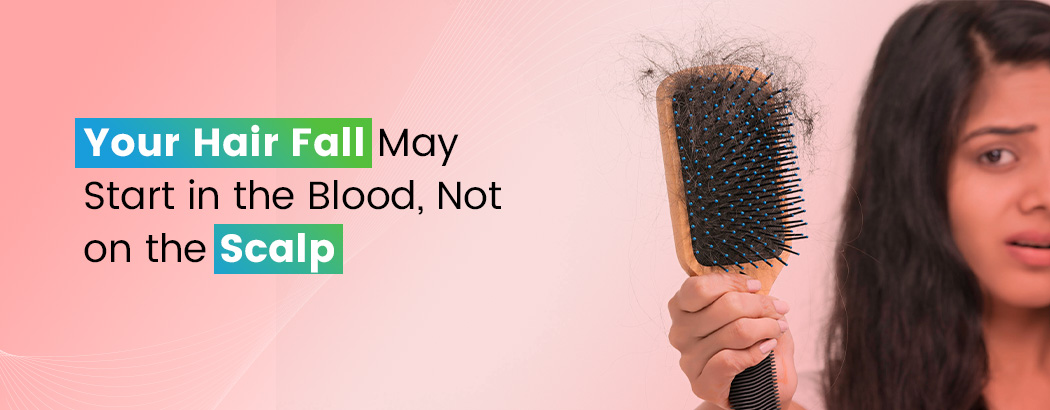
Your Hair Fall May Start in the Blood, Not on the Scalp
Hair fall is one of the most emotionally draining problems people face today.
You see hair on your pillow, in the shower drain, on your comb, and slowly, in the mirror. Naturally, you panic. You change shampoos. You switch oils. You buy expensive serums. You try home remedies. You even stop washing your hair too often.
Yet, nothing really changes.
Hair keeps falling.
What if the real problem isn’t your scalp at all?
What if your hair fall actually starts inside your body—deep in your blood?
This is a reality most people never consider. Because hair fall is often treated as a cosmetic issue, when in fact, it is very often a medical signal.
Hair Is Not Just Hair — It’s a Reflection of Internal Health
Hair growth is a biological process, not a beauty routine.
Each hair strand grows from a follicle that depends on:
-
Oxygen
-
Nutrients
-
Hormones
-
Proper blood circulation
If your blood lacks essential nutrients or if internal systems are imbalanced, your hair follicles are the first to suffer.
Why?
Because hair is not a survival organ. When the body is under stress or deficiency, it redirects nutrients to vital organs like the heart and brain—leaving hair growth compromised.
So even the best shampoo cannot fix what your blood cannot supply.
Why Topical Treatments Alone Often Fail
Many people ask:
I m using good products. Then why is my hair still falling?”
Because topical products:
-
Work only on the scalp surface
-
Cannot correct internal deficiencies
-
Do not fix the hormonal imbalance
-
Cannot improve blood quality
At best, they may reduce breakage. But true hair fall caused by internal issues continues.
This is why hair fall keeps returning again and again—even after expensive treatments.
The Hidden Blood-Related Causes of Hair Fall
Let’s talk about what actually happens inside your body.
1. Iron Deficiency (One of the Biggest Causes)
Iron helps your blood carry oxygen to hair follicles. When iron levels are low:
-
Hair follicles weaken
-
Hair enters the shedding phase early
-
Regrowth becomes slow or poor
Many women have an iron deficiency without knowing it, especially due to:
-
Heavy periods
-
Poor diet
-
Pregnancy or post-pregnancy changes
Hair fall may be the first visible symptom.
2. Low Ferritin Levels
Ferritin is the stored form of iron. Even if hemoglobin looks “normal,” low ferritin can still cause hair loss.
Symptoms often include:
-
Diffuse hair thinning
-
Increased shedding
-
Weak hair strands
-
Fatigue
This is commonly missed in routine tests.
3. Vitamin B12 Deficiency
Vitamin B12 plays a major role in:
-
Red blood cell formation
-
Oxygen delivery
-
Nerve health
Low B12 can cause:
-
Excessive hair fall
-
Slow regrowth
-
Premature greying
-
Fatigue and brain fog
Vegetarians are especially prone to this deficiency.
4. Vitamin D Deficiency
Vitamin D supports hair follicle cycling. Deficiency may lead to:
-
Hair thinning
-
Hair fall patches
-
Reduced hair density
Low vitamin D is extremely common—even in people who appear healthy.
5. Poor Protein Levels
Hair is made of keratin, a protein. Inadequate protein intake can cause:
-
Weak hair shafts
-
Increased breakage
-
Hair thinning
Crash diets and extreme weight loss plans often trigger this type of hair fall.
Hormones: The Blood-Borne Hair Fall Triggers
Hormones travel through the bloodstream. Any imbalance directly affects hair follicles.
Thyroid Imbalance
Both hypothyroidism and hyperthyroidism can cause:
-
Diffuse hair fall
-
Dry, brittle hair
-
Slow regrowth
Hair loss may appear months before thyroid problems are diagnosed.
PCOS and Insulin Resistance
Women with PCOS may experience:
-
Hair thinning on the scalp
-
Hair fall despite regular periods
-
Increased facial or body hair
This happens due to elevated androgens circulating in the blood.
Post-Pregnancy & Post-Illness Hair Fall
After pregnancy, COVID, fever, or major illness, the body shifts nutrients to recovery. This leads to:
-
Telogen effluvium (sudden hair shedding)
-
Hair fall 2–3 months later
This is temporary—but requires internal support to recover properly.
Stress: The Silent Blood Disruptor
Chronic stress increases cortisol levels in the blood.
High cortisol:
-
Pushes hair into the shedding phase
-
Disrupts nutrient absorption
-
Affects hormone balance
Stress-related hair fall often comes with:
-
Sleep issues
-
Anxiety
-
Digestive problems
Treating hair without managing stress rarely works.
Scalp Problems Are Often Secondary, Not Primary
Yes, scalp health matters—but in many cases, scalp issues develop after an internal imbalance.
For example:
-
Poor blood circulation → weak follicles → dandruff, sensitivity
-
Hormonal imbalance → oil imbalance → itching, hair fall
Treating the scalp alone treats the symptom, not the cause.
Hair Fall Patterns That Suggest an Internal Cause
If you notice:
-
Hair falling from all over the scalp
-
Sudden increase in shedding
-
No itching or dandruff, yet hair fall continues
-
Hair thinning without bald patches
-
It often points to blood-related or systemic causes.
Hair Fall: External vs Internal Causes
| External Factors | Internal Factors |
|---|---|
| Pollution | Iron deficiency |
| Harsh products | Hormonal imbalance |
| Heat styling | Thyroid issues |
| Tight hairstyles | Vitamin deficiencies |
| Chemical treatments | Stress & inflammation |
Most long-term hair fall issues come from the right column.
Why Hair Fall Needs Medical Evaluation
Ignoring internal causes leads to:
-
Chronic hair thinning
-
Poor regrowth
-
Repeated cycles of hair fall
-
Emotional distress
A proper evaluation looks beyond hair:
-
Blood tests
-
Hormone levels
-
Nutritional status
-
Lifestyle and stress
This is the difference between temporary fixes and lasting results.
Hair Regrowth Starts When Blood Health Improves
Once deficiencies are corrected and hormones stabilize:
-
Hair fall slows down
-
New baby hairs appear
-
Hair thickness improves
-
Scalp health naturally recovers
This process takes time—but it works when done correctly.
How Minnerva Clinic Treats Hair Fall at the Root
At Minnerva Clinic, hair loss is not treated as a cosmetic problem.
We treat it as a medical condition with an underlying cause.
Our approach focuses on:
-
Identifying internal triggers
-
Correcting blood and nutrient imbalances
-
Restoring hormonal balance
-
Supporting natural hair regrowth
What Makes Minnerva Clinic’s Hair Fall Treatment Different?
-
✔️ Detailed blood investigations
-
✔️ Hormonal evaluation when required
-
✔️ Nutritional and deficiency correction
-
✔️ Personalized treatment plans
-
✔️ Medical + holistic approach
-
✔️ Focus on long-term results, not quick fixes
Whether your hair fall is due to deficiency, hormones, stress, PCOS, thyroid imbalance, or post-illness recovery, our experts design a plan tailored to your body, not just your hair.
When Should You Seek Medical Help for Hair Fall?
You should consider a professional evaluation if:
-
Hair fall lasts more than 2–3 months
-
You see thinning or reduced volume
-
Hair fall started after illness or stress
-
You have fatigue, irregular cycles, or weight changes
-
Products are not helping
Early treatment prevents permanent damage.
Final Thought: Stop Treating Hair Fall Only on the Surface
Hair fall is not always a scalp problem.
Very often, it’s your body asking for attention.
When blood health improves, hair follows.
Book a consultation at Minnerva Clinic to identify the real cause of your hair fall and begin root-level treatment
🔗 https://www.minnervaclinic.com/