
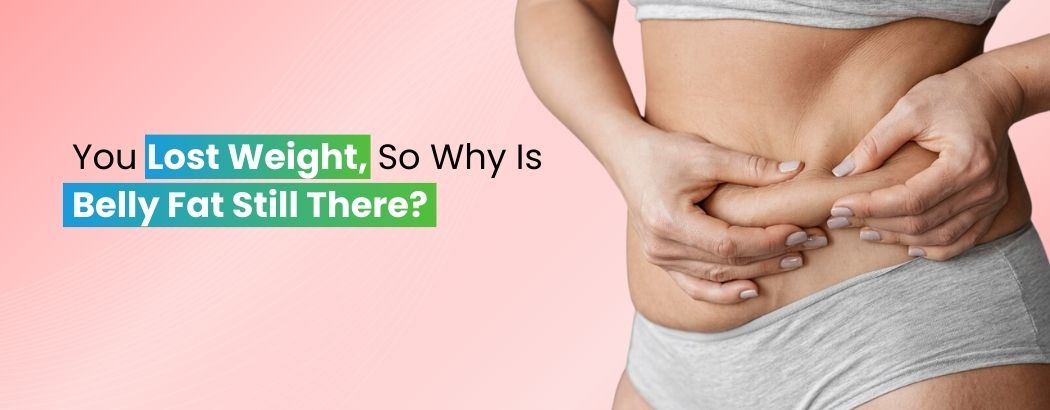
You Lost Weight, So Why Is Belly Fat Still There?
You worked hard.
You cut calories, changed your diet, exercised regularly, and the weighing scale finally moved in the right direction. Your clothes fit better, your face looks slimmer, and people around you notice the change.
But when you look in the mirror, one thing refuses to go away.
Belly fat.
This is one of the most frustrating experiences for people who lose weight. Overall weight goes down, but stubborn fat around the stomach stays exactly where it is. Many start blaming their body, genetics, or age, while others push themselves harder with extreme workouts or crash diets, often making things worse.
The truth is, belly fat behaves very differently from general body fat. Losing weight does not automatically mean losing belly fat. To understand why, you need to look beyond calories and exercise and understand how the body actually stores and releases fat.
This blog explains, in detail, why belly fat stays even after weight loss, what mistakes most people make, and how it can be treated effectively and safely.
Understanding the Difference Between Weight Loss and Fat Loss
The first thing to understand is that weight loss and fat loss are not the same.
When the scale shows a lower number, it can be due to:
-
Loss of water weight
-
Loss of muscle mass
-
Reduction in fat from easier-to-lose areas
The body does not burn fat evenly. Some fat deposits are metabolically active and easier to lose, while others are more stubborn and resistant.
Belly fat falls into the stubborn category.
Why Belly Fat Is So Stubborn
Belly fat is not just extra padding. It is influenced by hormones, lifestyle, stress, age, and genetics. This makes it far more complex than fat stored in areas like arms or legs.
Types of Belly Fat
There are two main types:
|
Type of Fat |
Location |
Why It Matters |
|
Subcutaneous fat |
Just under the skin |
Causes a visible belly bulge |
|
Visceral fat |
Around internal organs |
Hormone-sensitive and harder to lose |
Even if your weight drops, visceral fat often resists change unless the right strategy is followed.
The Most Common Reasons Belly Fat Remains After Weight Loss
1. Hormonal Imbalance
Hormones play a major role in fat storage, especially around the abdomen.
-
High cortisol levels promote belly fat storage
-
Insulin resistance pushes fat towards the stomach
-
Low testosterone in men increases abdominal fat
-
An estrogen imbalance in women affects lower belly fat
No amount of dieting alone can fix hormonal fat storage.
2. You Lost Muscle Along With Weight
Crash diets and excessive cardio often cause muscle loss. When muscle mass decreases:
-
Metabolism slows down
-
Fat-burning efficiency drops
-
The belly appears softer and more prominent
This is why some people look thinner overall but still have a protruding stomach.
3. Chronic Stress and Cortisol
Stress is one of the biggest but most ignored reasons for stubborn belly fat.
When stress levels stay high:
-
Cortisol remains elevated
-
Fat gets redirected to the abdominal area
-
Belly fat becomes more resistant to burning
Poor sleep, work pressure, emotional stress, and overtraining all contribute.
4. Poor Core Muscle Tone
Even if fat is reduced, weak abdominal muscles make the belly stick out.
This creates the illusion of fat even when the actual fat layer is thinner. Strengthening the core is essential for a flat stomach appearance.
5. Inflammation and Gut Health Issues
Poor digestion, bloating, and inflammation can make the belly appear larger than it actually is.
Common triggers include:
-
Processed foods
-
High sugar intake
-
Food intolerances
-
Poor gut bacteria balance
Inflamed tissues store fat more easily and release it more slowly.
6. Genetics and Fat Distribution Pattern
Some people are genetically programmed to store fat in the abdominal area. This does not mean belly fat cannot be reduced, but it does mean it needs a more targeted approach.
Why Doing More Cardio Often Backfires
Many people respond to belly fat by increasing cardio sessions. While cardio helps burn calories, too much of it can:
-
Increase cortisol levels
-
Lead to muscle loss
-
Slow metabolic rate
This combination actually makes belly fat harder to lose over time.
Why Spot Reduction Does Not Work Naturally
Doing hundreds of crunches will not burn belly fat specifically.
Fat loss happens systemically, not locally. Exercise strengthens muscles, but fat reduction depends on hormonal balance, metabolism, and overall fat-burning signals.
This is why belly fat often remains even when people are exercising daily.
The Right Way to Approach Stubborn Belly Fat
1. Focus on Fat Loss, Not Just Weight Loss
Instead of obsessing over the scale:
-
Track body measurements
-
Monitor waist circumference
-
Pay attention to body composition
Fat loss should be the goal, not just weight reduction.
2. Balance Hormones Naturally
-
Improve sleep quality
-
Manage stress actively
-
Avoid extreme calorie restriction
-
Include strength training
Balanced hormones create the right environment for belly fat loss.
3. Build Muscle, Especially Core Muscles
Strength training helps:
-
Increase metabolism
-
Improve body shape
-
Reduce soft belly appearance
A stronger core supports better posture and a flatter abdomen.
4. Fix Digestion and Inflammation
-
Eat whole, unprocessed foods
-
Reduce sugar and refined carbs
-
Stay hydrated
-
Identify food sensitivities
A healthy gut reduces bloating and improves fat metabolism.
When Lifestyle Changes Are Not Enough
Despite doing everything right, some people still struggle with stubborn belly fat. This usually happens when:
-
Fat cells in the abdomen have become resistant
-
Skin elasticity has reduced
-
Fat pockets remain localized
In such cases, medical intervention becomes a practical and effective option.
Medical Solutions for Stubborn Belly Fat
Modern body contouring treatments are designed for people who have already lost weight but want to target specific problem areas.
Effective Options Include
-
Non surgical fat reduction treatments
-
Advanced liposuction techniques
-
Body contouring procedures
-
Skin tightening solutions
These treatments focus on removing resistant fat cells safely and permanently.
Why Professional Evaluation Is Important
Not every belly fat problem needs the same solution. Factors like fat thickness, skin quality, muscle tone, and overall health determine the best approach.
Random treatments or unverified clinics can lead to poor results or complications.
Expert assessment ensures:
-
Correct treatment selection
-
Natural-looking results
-
Safe and controlled fat reduction
-
Long-term satisfaction
Targeted Belly Fat Treatment at Minnerva Clinic
At Minnerva Clinic, belly fat is approached scientifically, not cosmetically. The focus is on understanding why fat remains and choosing the most effective solution for each individual.
How the Approach Works
-
Detailed body and fat assessment
-
Evaluation of skin elasticity and muscle tone
-
Customized treatment planning
-
Use of advanced, medically approved techniques
-
Focus on safety, precision, and natural contours
Treatments are designed especially for people who have already lost weight but are stuck with stubborn abdominal fat.
Who Is an Ideal Candidate
You may benefit from professional belly fat treatment if:
-
You have lost weight, but belly fat remains
-
Your BMI is near normal,l but your waist size is large
-
Diet and exercise are no longer giving results
-
You want targeted fat reduction, not overall weight loss
Take the Next Step Toward a Flatter Abdomen
If belly fat is the only thing standing between you and your ideal body shape, it is time to stop blaming yourself. Stubborn belly fat is a biological issue, not a lack of effort.
Getting the right guidance makes all the difference.
Schedule your consultation here:
https://www.drvivekguptawithme.com/schedule-appointment
This is the doctor you should contact if you want a clear diagnosis, honest advice, and effective solutions tailored to your body.