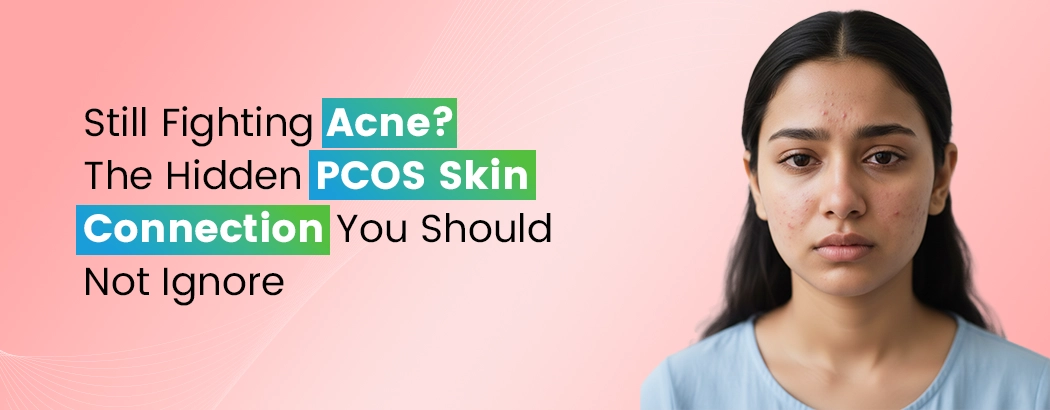
Still Fighting Acne? The Hidden PCOS Skin Connection You Should Not Ignore
You changed your cleanser.
You followed a strict skincare routine.
You invested in treatments that promised visible results.
Still, the acne returns.
It can feel exhausting and confusing, especially when you are doing everything right. Over time, many women begin to question their habits, their diet, or even their discipline. But what if the issue is not your skincare routine at all?
What if your skin is reflecting an internal hormonal imbalance?
For many women, persistent acne and unusual skin changes are linked to Polycystic Ovary Syndrome, commonly known as PCOS. The connection is often overlooked because the focus remains on external treatments while the root cause develops internally.
Understanding this link can completely change the way you approach your skin.
When Acne Is a Hormonal Signal
Hormonal acne linked to PCOS often looks different from occasional breakouts.
It commonly appears:
• Along the jawline and chin
• On the lower cheeks
• Around the neck
• As deep, painful cystic pimples
• Repeatedly in the same areas
Unlike teenage acne, this type often continues into the twenties and thirties. It may worsen before menstrual cycles or remain persistent throughout the month.
If your acne does not respond well to standard treatments, it may be time to look beyond the surface.
How PCOS Triggers Skin Problems
PCOS is a hormonal condition that affects ovulation and metabolic balance. A key feature of PCOS is elevated androgen levels. Androgens stimulate oil glands in the skin, leading to excess sebum production.
More oil means clogged pores. Clogged pores mean inflammation. Inflammation leads to acne.
Insulin resistance is another major factor. Many women with PCOS have difficulty processing insulin efficiently. When insulin levels rise, they can stimulate additional androgen production and increase inflammation.
The result is a cycle that keeps the skin in a reactive state.
Below is a clear breakdown of how internal imbalances lead to visible skin changes.
|
Internal Imbalance |
What Happens Inside the Body |
Visible Skin Effect |
|
Elevated androgens |
Increased oil production |
Persistent acne and oily skin |
|
Insulin resistance |
Higher insulin and inflammation |
Dark patches and breakouts |
|
Hormonal fluctuation |
Irregular ovulation |
Acne flares before periods |
|
Chronic inflammation |
Increased inflammatory response |
Painful cystic pimples |
|
Metabolic imbalance |
Slower skin healing |
Long-lasting acne marks |
When you understand this connection, it becomes clear why surface treatments alone may not provide lasting results.
Other Skin Changes Linked to PCOS
Acne is not the only skin symptom associated with PCOS. Many women notice additional changes, including:
• Increased facial or body hair growth
• Thinning hair on the scalp
• Sudden increase in oiliness
• Darkened skin around the neck or underarms
Dark patches on the neck or underarms are often linked to insulin resistance. These areas may appear thicker and slightly velvety in texture.
These symptoms are not random. They are signals.
Why Skincare Alone May Not Be Enough
Topical treatments address bacteria, clogged pores, and surface inflammation. They can be helpful and sometimes necessary. However, if elevated hormones and insulin resistance continue internally, acne may return once treatment stops.
Without addressing:
• Hormonal imbalance
• Insulin resistance
• Chronic inflammation
• Lifestyle stressors
The root cause remains active.
This explains why many women cycle through multiple products without long-term improvement.
Effective Treatment Strategies That Work From Within
Managing PCOS-related skin concerns requires a comprehensive approach.
Improve Insulin Sensitivity
Balanced nutrition plays a major role in regulating insulin and hormones. Focus on:
• Protein-rich meals
• High fiber vegetables
• Whole grains
• Reduced refined sugar intake
• Consistent meal timing
Regular physical activity improves insulin response and supports metabolic health.
Medical Hormonal Support
Healthcare providers may recommend:
• Oral contraceptive pills
• Anti-androgen medications
• Insulin-sensitizing treatments
These options help regulate hormones and reduce excess androgen activity that contributes to acne.
Medical supervision is essential for personalized treatment.
Targeted Dermatological Care
Dermatological treatments may include:
• Retinoids
• Benzoyl peroxide
• Prescription topical creams
• Professional procedures when required
When combined with internal hormonal management, these treatments are far more effective.
Lifestyle and Stress Management
Chronic stress increases cortisol levels, which can indirectly affect insulin and hormone balance. Prioritizing sleep, moderate exercise, and stress reduction supports overall improvement.
Small daily habits create meaningful long-term change.
When Should You Consider Getting Evaluated
If acne appears alongside:
• Irregular menstrual cycles
• Unexplained weight gain
• Increased facial hair
• Difficulty conceiving
• Persistent fatigue
A medical evaluation for PCOS may be appropriate.
Early diagnosis allows earlier intervention. Addressing the condition at its root can improve not only skin health but also reproductive and metabolic well-being.
Conclusion
Persistent acne can feel discouraging, especially when you have tried everything. But sometimes the answer is not in another skincare product. It is in understanding your hormones.
PCOS-related skin changes are common yet often misunderstood. When you recognize the connection between internal imbalance and external symptoms, your approach becomes more strategic and effective.
Treating only the surface may offer temporary relief. Treating the root cause offers lasting improvement.
If you are still fighting acne despite consistent effort, consider looking deeper. Your skin may be sending a message about your hormonal health.
Clear skin begins with clarity about what is happening inside your body.
And once you address that, real progress becomes possible.