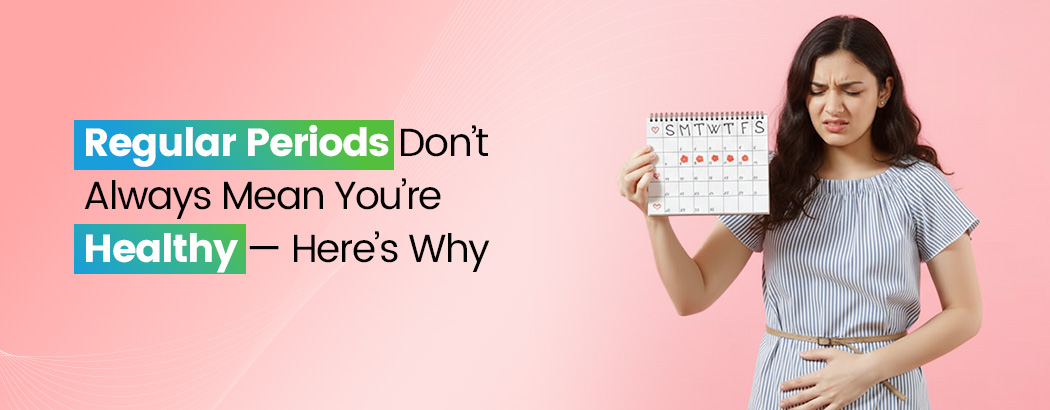
Regular Periods Don’t Always Mean You’re Healthy — Here’s Why
For years, women have been told one simple thing:
If your periods are regular, you’re healthy.
It sounds comforting. Reassuring. Almost like a green signal that everything inside your body is working exactly the way it should.
Your period comes every 28–30 days. It doesn’t skip. It doesn’t surprise you. So naturally, you assume there’s nothing to worry about.
But here’s the truth most women are never told:
Regular periods do not always equal good health.
Many women experience chronic fatigue, painful cramps, mood swings, hormonal acne, hair fall, weight gain, low immunity, or fertility issues—even when their menstrual cycle looks perfectly normal on the calendar.
Your body can keep the cycle “on time” while silently struggling underneath.
Let’s understand why.
The Menstrual Cycle Is a Signal — Not a Full Health Report
Your menstrual cycle is just one indicator of your reproductive system. It tells you that ovulation and hormone signaling are happening, but it doesn’t reveal how well they are happening.
Think of it like this:
A car may start every morning, but that doesn’t mean the engine is healthy.
Similarly, your periods may be regular, but your body could still be dealing with:
-
Hormonal imbalance
-
Nutrient deficiencies
-
Chronic stress
-
Inflammation
-
Early-stage gynecological conditions
These problems don’t always stop periods—but they slowly affect your quality of life.
Common Symptoms Women Ignore Because Periods Are Normal
Many women delay medical care simply because their cycle is regular. They normalize symptoms that are not actually normal.
Here are some red flags often ignored:
-
Constant tiredness, even after proper sleep
-
Severe cramps that affect daily life
-
Mood swings, anxiety, or irritability before periods
-
Heavy bleeding or extreme clotting
-
Headaches or migraines during cycles
-
Hormonal acne or sudden hair fall
-
Bloating, digestive issues, or breast tenderness
-
Low libido or sleep disturbances
If any of these sound familiar, your body is trying to tell you something.
Regular Periods Can Still Hide Hormonal Imbalances
Hormones don’t work alone—they work in balance.
Even when estrogen and progesterone follow a cycle, their levels may be too high, too low, or out of sync. This can lead to symptoms without affecting the timing of your period.
Common hidden hormonal issues include:
-
Estrogen dominance
-
Low progesterone
-
Thyroid imbalance
-
Insulin resistance
-
Elevated cortisol (stress hormone)
These conditions often go unnoticed because periods continue to come on time.
PCOS Can Exist Even With Regular Periods
One of the biggest myths is that PCOS always causes irregular periods.
In reality, many women with early-stage or mild PCOS still menstruate regularly but experience:
-
Hair thinning or excessive hair growth
-
Weight gain around the abdomen
-
Acne or oily skin
-
Mood changes
-
Difficulty conceiving
Without proper evaluation, PCOS may remain undiagnosed for years.
Nutrient Deficiencies Don’t Stop Periods — But They Affect Everything Else
Your body needs essential nutrients to support hormone production and energy levels.
Even with regular cycles, deficiencies can cause:
-
Iron deficiency → fatigue, breathlessness, weakness
-
Vitamin D deficiency → bone pain, mood issues, immunity problems
-
Vitamin B12 deficiency → brain fog, anxiety, low energy
-
Magnesium deficiency → cramps, headaches, poor sleep
Periods may continue, but your overall health quietly suffers.
Stress: The Silent Disruptor That Doesn’t Always Delay Periods
Stress doesn’t always cause missed periods.
Sometimes, it shows up as:
-
PMS that feels unbearable
-
Sleep problems before periods
-
Digestive discomfort
-
Anxiety or emotional overwhelm
-
Hormonal acne flare-ups
High stress raises cortisol levels, which interfere with estrogen and progesterone balance—without changing cycle dates.
When Normal Period Pain Is Actually Not Normal
Many women are told that pain during periods is “part of being a woman.”
But severe pain is not normal.
Painful periods may indicate:
-
Hormonal imbalance
-
Endometriosis
-
Adenomyosis
-
Pelvic inflammation
-
Uterine sensitivity
Ignoring pain because periods are regular can delay diagnosis and treatment.
Regular Periods vs True Hormonal Health
| Regular Periods | True Hormonal Health |
|---|---|
| Cycle arrives on time | Minimal pain and discomfort |
| Bleeding every month | Balanced energy levels |
| No missed periods | Stable mood throughout the cycle |
| Predictable dates | Healthy skin, hair, and sleep |
| Calendar-based normal | Symptom-free, holistic wellbeing |
Periods are just one part of the picture.
Why Routine Tests Often Miss the Problem
Basic reports may say “normal” because:
-
Hormone levels fluctuate daily
-
Reference ranges are broad
-
Root causes aren’t deeply investigated
-
Lifestyle factors aren’t considered
This is why many women feel unheard when symptoms persist despite “normal reports.”
Listening to Your Body Matters More Than the Calendar
If you constantly feel like something is off—but can’t explain why—trust that feeling.
Your body communicates through symptoms long before serious conditions develop.
Early attention can:
-
Prevent long-term complications
-
Improve fertility outcomes
-
Restore energy and confidence
-
Reduce dependency on painkillers
-
Support overall hormonal balance
How Minnerva Clinic Helps You Go Beyond Normal Periods
At Minnerva Clinic, women’s health is not judged only by cycle dates.
We focus on how you feel, not just how your reports look.
Our approach is designed to identify the root cause behind symptoms—even when periods are regular.
What Makes Minnerva Clinic Different?
-
✔️ Comprehensive hormonal evaluation
-
✔️ Advanced diagnostic testing
-
✔️ Personalized gynecology treatment plans
-
✔️ Root-cause–based care, not symptom masking
-
✔️ Holistic focus on hormones, nutrition, and lifestyle
-
✔️ Compassionate, confidential, patient-first approach
Whether you’re dealing with hormonal imbalance, PCOS, painful periods, unexplained fatigue, fertility concerns, or emotional changes, our specialists work with you to restore true internal balance.
When Should You Consult a Gynecologist?
You should consider expert care if you:
-
Have regular periods but feel constantly tired
-
Experience pain, PMS, or mood swings every month
-
Notice hair fall, acne, or unexplained weight changes
-
Are you planning a pregnancy or facing fertility challenges
-
Feel “normal” on paper but unwell in daily life
Book your consultation with experienced gynecology specialists at Minnerva Clinic
🔗 https://www.minnervaclinic.com/