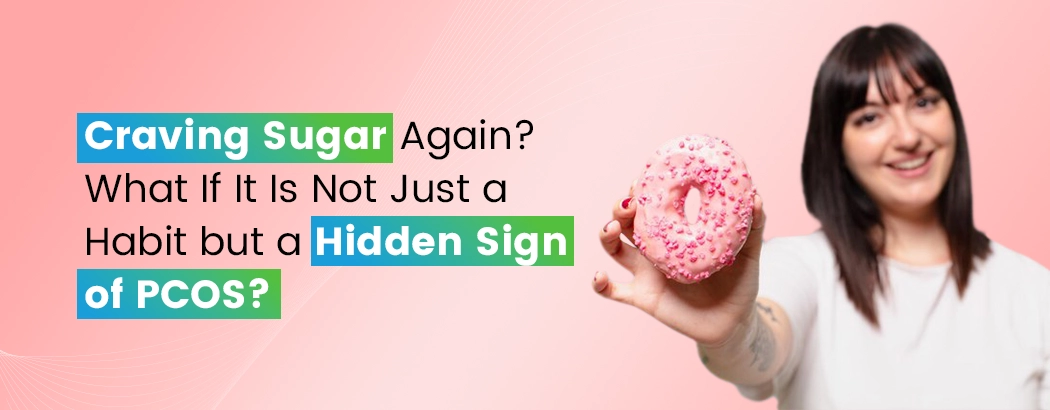
Craving Sugar Again? What If It Is Not Just a Habit but a Hidden Sign of PCOS?
You promised yourself this week would be different.
Less sugar. Better control. Healthier choices.
Yet by afternoon, the craving returns. Not real hunger. Just an intense urge.
You start blaming your willpower.
But what if it is not about discipline at all?
What if your body is signaling something deeper?
For many women, repeated sugar cravings are not random. They can be linked to PCOS, and the connection often goes unnoticed for years.
Understanding PCOS Beyond Irregular Periods
PCOS is one of the most common hormonal disorders affecting women of reproductive age. It is typically associated with irregular periods, fertility challenges, acne, or weight gain. However, the root issue often lies deeper in metabolic health.
A major factor in PCOS is insulin resistance.
Insulin is the hormone responsible for regulating blood sugar levels. When you eat carbohydrates or sugar, your blood sugar rises. Insulin helps move that sugar into your cells so it can be used for energy.
In insulin resistance, the body does not respond properly to insulin. To compensate, it produces more of it. Over time, consistently high insulin levels can disrupt other hormones, especially those responsible for ovulation.
This is where sugar cravings start to make sense.
The Science Behind Sugar Cravings and Insulin Resistance
When insulin resistance develops, the body struggles to maintain stable blood sugar levels. This often leads to a cycle:
• Blood sugar rises quickly after eating
• The body releases a large amount of insulin
• Blood sugar drops rapidly
• Energy crashes follow
• Cravings for quick sugar return
This cycle repeats itself, sometimes daily.
The craving is not a lack of control. It is a physiological response to fluctuating blood sugar.
High insulin levels can also stimulate the ovaries to produce more androgens, often referred to as male hormones. These hormonal shifts can interfere with ovulation and contribute to common PCOS symptoms.
Signs That Your Cravings May Be Hormonal
Occasional dessert cravings are normal. But when cravings are intense, frequent, and combined with other symptoms, they may signal something more.
Here are common patterns associated with PCOS:
|
Symptom or Pattern |
Possible Meaning |
|
Frequent strong sugar cravings |
Blood sugar imbalance |
|
Energy crashes after meals |
Insulin spikes |
|
Weight gain around the abdomen |
Hormonal and metabolic changes |
|
Irregular or missed periods |
Ovulation disruption |
|
Persistent acne |
Elevated androgen levels |
|
Excess facial or body hair |
Hormonal imbalance |
|
Difficulty losing weight despite effort |
Insulin resistance |
If you relate to several of these signs, it may be worth exploring further with a healthcare professional.
Why PCOS Is Often Overlooked
One reason PCOS remains undiagnosed in many women is that symptoms appear gradually. There is rarely a dramatic beginning.
Periods become slightly irregular.
Weight increases slowly.
Acne persists beyond teenage years.
Cravings become more frequent.
Each symptom alone may seem manageable or unrelated. Together, they form a clearer picture.
Many women only receive a diagnosis when they try to conceive and experience difficulty. By then, insulin resistance may have been present for years.
Early recognition can make a significant difference.
The Fertility and Long-Term Health Impact
PCOS affects ovulation. Without regular ovulation, menstrual cycles become unpredictable, and conception becomes more challenging.
But fertility is only one part of the picture.
Untreated insulin resistance can increase the risk of:
• Type 2 diabetes
• High cholesterol
• High blood pressure
• Cardiovascular disease
• Chronic inflammation
PCOS is not just a reproductive condition. It is also a metabolic one.
Understanding this connection empowers you to take action sooner rather than later.
Breaking the Cycle of Cravings
Instead of fighting cravings with guilt or extreme restriction, focus on stabilizing blood sugar.
Here are practical steps you can start today:
• Eat balanced meals that include protein, fiber, and healthy fats
• Avoid skipping meals, especially breakfast
• Reduce refined sugars gradually rather than eliminating everything at once
• Choose whole grains instead of processed carbohydrates
• Include regular strength training or physical activity
• Prioritize sleep and stress management
When blood sugar becomes more stable, cravings often reduce naturally.
The goal is not perfection. It is a balance.
When to Seek Medical Advice
If sugar cravings are frequent and you notice irregular cycles, weight changes, or persistent acne, consider consulting a gynecologist or endocrinologist.
Testing may include:
• Fasting insulin levels
• Blood glucose levels
• Hormone panels
• Ultrasound evaluation of the ovaries
Early diagnosis allows for early intervention. Lifestyle adjustments, medical support, and sometimes medication can help restore hormonal balance.
Listening to Your Body
Your body communicates through patterns. Cravings are not random signals. They are feedback.
Instead of asking why you lack discipline, ask what your body needs.
Are your meals balanced?
Are you sleeping enough?
Are your cycles regular?
Is your energy stable throughout the day?
Awareness is powerful.
Conclusion
Craving sugar again and again may seem like a small habit. But in some cases, it can be an early sign of insulin resistance and PCOS.
PCOS does not always appear dramatically. It often develops quietly through subtle symptoms like irregular periods, stubborn weight gain, fatigue, acne, and repeated sugar cravings.
The important thing is not to panic. It is important to pay attention.
If something feels repetitive or unusual, trust yourself enough to investigate. Early awareness can protect your hormonal health, fertility, and long-term well-being.
The next time a craving appears, pause before judging yourself.
Sometimes what feels like a weakness is actually your body asking for care.