
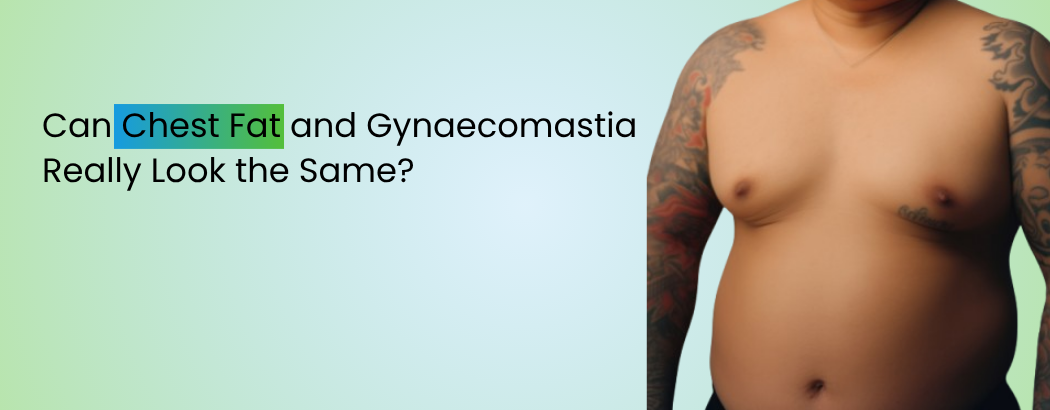
Can Chest Fat and Gynaecomastia Really Look the Same?
For many men, standing in front of the mirror or changing in a locker room can bring an unexpected wave of self-consciousness. If you have noticed an enlargement in the chest area, a common and deeply frustrating assumption immediately follows: "I just need to hit the gym harder and lose weight."
You might spend months increasing your chest workouts, cutting calories, and doing endless sets of bench presses, only to look down and realize the contour of your chest hasn't changed at all. The fullness remains.
This moment of realization is often accompanied by a confusing and distressing question: Is this simply stubborn chest fat (pseudogynecomastia), or is it something medically distinct like true gynecomastia? On the surface, the visual result can look remarkably similar. Both conditions create a rounded, feminine contour in the male chest that resists standard weight loss efforts.
However, beneath the skin, the physiological reality is entirely different. Mistaking true gynecomastia for simple body fat can lead to months of wasted effort, frustration, and a missed opportunity to address an underlying endocrine imbalance.
The Visual Deception: Pseudogynecomastia vs. True Gynecomastia
To the untrained eye—and even to the man experiencing it—the mirror does not reveal the biological architecture beneath the skin. This is why chest fat and gynecomastia are so frequently confused.
1. Pseudogynecomastia (Lipomastia)
Pseudogynecomastia is precisely what it sounds like: false gynecomastia. It occurs when excess adipose (fat) tissue accumulates in the chest area due to generalized weight gain, a high-calorie diet, or a sedentary lifestyle.
-
The Texture: When you pinch the area, it typically feels soft, diffuse, and uniform.
-
The Behavior: Because it is standard fat tissue, it responds to overall body fat reduction. If you enter a sustained, disciplined caloric deficit and lower your overall body fat percentage, pseudogynecomastia will generally shrink.
2. True Gynecomastia
True gynecomastia is not an accumulation of fat; it is the abnormal growth or proliferation of glandular breast tissue in males. This is caused by an underlying hormonal imbalance—specifically, an altered ratio between estrogens and androgens (testosterone) in the body.
-
The Texture: When you examine the chest, true gynecomastia often feels firm, rubbery, or dense directly beneath the nipple areolar complex. It can sometimes be tender or sensitive to the touch.
-
The Behavior: Here is the crucial differentiator: true gynecomastia does not melt away with diet and exercise. No amount of chest presses or cardio will eliminate glandular tissue. If you lose weight while having true gynecomastia, you may actually find that the condition becomes more visually pronounced as the surrounding fat shrinks away, leaving the firm glandular disc more exposed.
The Hormonal Engine Behind True Gynecomastia
If true gynecomastia is driven by hormones, why does it happen? The male body produces both testosterone and estrogen. While estrogen is typically thought of as a female hormone, men require small amounts of it for bone density, brain function, and cardiovascular health.
However, when that delicate balance is disrupted, the glandular tissue in the male chest receives a chemical signal to grow. This disruption can be triggered by several internal factors:
-
Age-Related Declines: As men age, testosterone levels naturally decline while aromatase (the enzyme that converts testosterone into estrogen) often remains active or increases, shifting the hormonal ratio.
-
Metabolic Drift and Insulin Resistance: Just as we see in women's health conditions, metabolic health plays a massive role here. Insulin resistance and high visceral fat increase aromatase activity, accelerating the conversion of circulating testosterone into estrogen right inside fat tissue.
-
Endocrine Disruptors and Medications: A wide range of substances—from certain prescription drugs (like anti-androgens, cardiovascular medications, and some antidepressants) to environmental toxins and hormonal supplements—can interfere with receptor sites and trigger glandular proliferation.
The Danger of the "Just Work Out Harder" Trap
When a man notices a changing chest contour, the social stigma often prevents him from talking about it. Instead, he internalizes the problem, assuming a lack of discipline is to blame. He steps up his fitness routine, strips his diet, and pushes his body to the limit.
When these extreme measures fail to flatten the chest, the psychological toll is heavy. Men often experience feelings of failure, body dysmorphia, and social anxiety—avoiding swimming pools, locker rooms, or fitted shirts entirely.
Worse still, pushing your body into an aggressive physical deficit while ignoring an underlying endocrine imbalance can backfire. If your body is already under metabolic stress, extreme dieting can suppress your natural testosterone production even further, ironically worsening the very hormonal imbalance causing the gynecomastia in the first place.
Clinical Design Tip: Physical changes that resist your best efforts are rarely isolated cosmetic issues; they are usually external indicators of an internal shift. To understand how systemic health, metabolic drift, and hormonal balance manifest as physical changes that catch you off guard, read our comprehensive analysis: Why Does Everything Look Normal Until You Suddenly Notice You've Changed?
Why Proper Clinical Diagnosis Matters
Because pseudogynecomastia and true gynecomastia require entirely different approaches, guessing is a waste of time.
If you are dealing with pseudogynecomastia, your path forward is metabolic optimization, nutritional restructuring, and consistent fat loss. But if you are dealing with true gynecomastia, you need a clinical evaluation to determine the root cause:
-
Diagnostic Lab Work: Checking your total and free testosterone, estradiol, prolactin, liver function, and fasting insulin levels to map your endocrine landscape.
-
Physical Assessment: A professional clinical examination to differentiate soft adipose tissue from firm glandular proliferation.
-
Targeted Solutions: Depending on the stage and severity of gynecomastia, solutions can range from medical management of underlying hormonal drivers to precision surgical excision for long-standing, fibrotic glandular tissue.
Shifting From Embarrassment to Empowered Action
If you have spent months fighting a chest contour that refuses to change, stop blaming your workout routine. Give yourself permission to look beyond the surface and treat this as a piece of biological data.
Your body is communicating with you. Whether it is signaling a metabolic imbalance, an endocrine shift, or simply an accumulation of stubborn adipose tissue, the key to resolving it is accurate identification. You do not have to live with the quiet frustration of a body that seems to be working against you.
Reclaiming Your Confidence at Minnerva Clinic
Addressing male chest enlargement requires a clinical approach that respects your privacy, your intelligence, and your health. At Minnerva Clinic, we look past the surface symptoms to audit your true metabolic and hormonal blueprint, helping you find clarity and effective, personalized solutions.
You deserve to feel completely confident in your own skin, and that starts with understanding the real story behind your body's changes.
🔴 REQUEST A SPECIALIZED CLINICAL ASSESSMENT
Are you tired of fighting a chest contour that won't respond to diet and exercise? Get the clarity and expert guidance you deserve. Connect with our team for a comprehensive, precision-based health evaluation.
-
Direct Hotline / WhatsApp: +91 7080213331
-
Our Premium Clinic Location: Minnerva Clinic, Lucknow, Uttar Pradesh
-
Get in Touch with Our Team: Visit Our Contact Us Page